
 Language
 English
 中文简体
中文简体 Deutsch
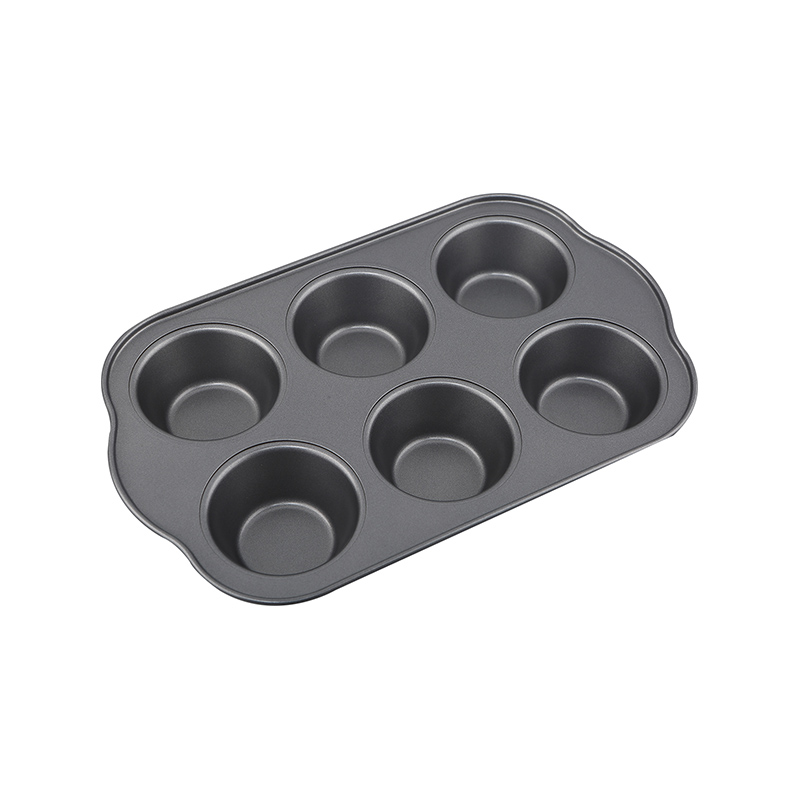
For commercial bakeries, foodservice suppliers and private-label bakeware brands, the performance of a Carbon Steel Muffin Pan depends on more than its metal construction. A pan may have the correct dimensions and cavity layout, yet still create production problems if the surface coating does not match the baking process. Sticking, difficult demolding, residue buildup and premature surface wear can all increase handling time and affect product consistency. For procurement teams, the key question is therefore not simply which coating is available, but whether the selected surface system fits the actual working environment.
Define the Baking Process Before Selecting a Coating
A practical coating specification should begin with the intended application. Batter composition, baking temperature, release agents, cooling procedures and cleaning methods can all influence coating performance.
For OEM development, buyers should provide information such as:
- Typical and up to baking conditions
- Type of batter or food formulation
- Manual or automated demolding
- Frequency of production cycles
- Cleaning equipment and detergents
- Contact with racks, utensils or conveyors
This approach helps manufacturers recommend a surface treatment based on real operating conditions instead of relying on a generic "non-stick" description. Recent commercial bakeware guidance similarly emphasizes defining the complete duty cycle before approving a coating system.
Release Performance Affects Production Efficiency
A muffin that remains attached to the cavity can create more than a cosmetic problem. Excessive force during demolding may damage the baked product, while repeated manual intervention can interrupt an otherwise organized production process.
A suitable coating should allow the product to separate cleanly without requiring excessive scraping or force. Commercial bakeware coating suppliers increasingly focus on release performance because easier demolding can also help reduce residue and handling issues during repeated production.
For buyers comparing suppliers, release performance should therefore be evaluated using samples under representative baking conditions rather than judged from coating appearance alone.
Cleaning Conditions Can Change Coating Life
Cleaning is often overlooked during product selection. In commercial kitchens, pans may encounter warm water, detergents, repeated washing and mechanical handling. Abrasive pads, metal tools or unsuitable cleaning procedures can gradually damage a coated surface.
Manufacturers should therefore understand the customer's cleaning process before finalizing the coating specification. Current commercial pan-care recommendations commonly advise avoiding abrasive cleaning methods that can shorten the usable life of non-stick surfaces.
For large-volume buyers, this is particularly important because cleaning requirements are repeated throughout the product's working life.
Surface Wear Should Be Evaluated Realistically
A coating does not operate independently from the pan. During production, the surface may experience contact with ingredients, utensils, racks, stacking systems and cleaning equipment.
When evaluating a coating, procurement teams should ask how the proposed system is intended to perform under their actual conditions. Useful validation may include:
- Release testing after repeated baking cycles
- Visual inspection of surface condition
- Cleaning and residue assessment
- Examination of areas exposed to repeated contact
- Comparison between initial and post-use performance
This type of evaluation gives buyers more useful information than relying on a single laboratory claim.
Pan Geometry Also Influences Release
Even a well-selected coating cannot compensate for every design problem. Deep cavities, sharp transitions or inconsistent forming can affect how easily muffins release from the pan.
For this reason, OEM projects should evaluate coating and geometry together. Cup dimensions, cavity shape, rim design and forming accuracy should be reviewed during sample development. A properly engineered structure can make the coating work more effectively while also supporting consistent product appearance.
Make Coating Documentation Part of Supplier Evaluation
For private-label and commercial bakeware buyers, documentation is another practical part of quality control. The approved coating type, application requirements, surface specifications and inspection criteria should be clearly recorded before mass production.
This creates a reference point when reviewing production batches or discussing changes with the manufacturer. It also reduces the risk of an approved sample and later production batch being treated as equivalent when their coating process differs.
Turn Surface Requirements Into a Production-Ready Specification
Choosing the right coating is ultimately a process of matching the pan to its working environment. A reliable Carbon Steel Muffin Pan should combine suitable steel construction, accurate forming, appropriate surface treatment and consistent manufacturing controls. For overseas buyers developing commercial or private-label bakeware, working directly with an experienced manufacturer makes it easier to translate baking, demolding and cleaning requirements into a practical product specification rather than selecting a pan based on appearance alone.
