
 Language
 English
 中文简体
中文简体 Deutsch
For commercial bakeries, foodservice operators and private-label bakeware buyers, choosing a Carbon Steel Muffin Pan involves more than deciding between different cup counts or surface finishes. The geometry of each cavity, spacing between cups, rim structure and overall pan dimensions can directly affect handling and baking consistency. When a pan is poorly matched to the production process, problems such as uneven shapes, difficult release, unstable handling and deformation can appear repeatedly. A well-planned design turns the pan from a basic baking accessory into a more reliable part of the production workflow.
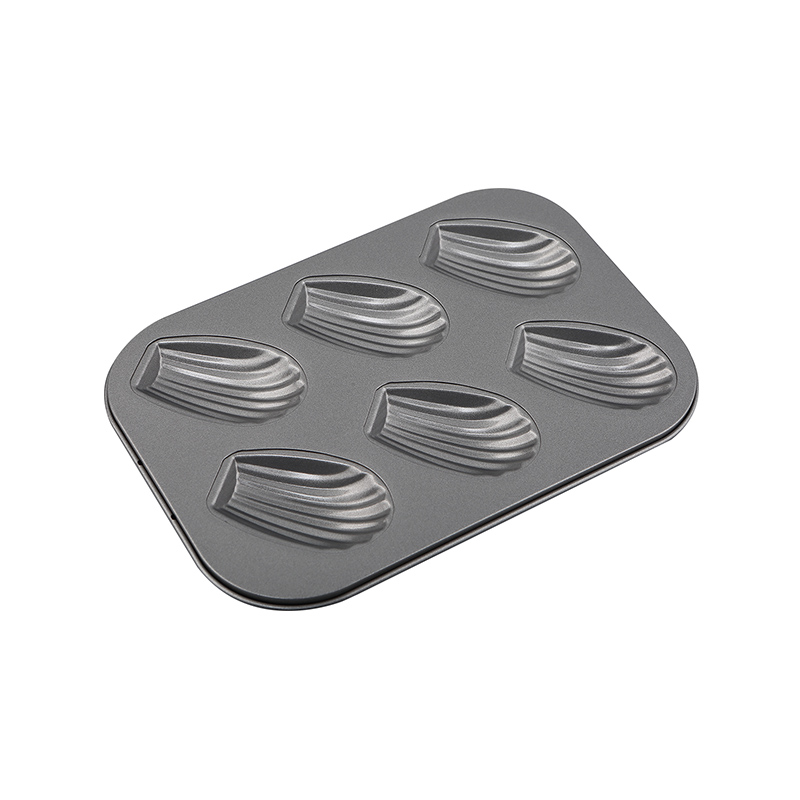
Cup Geometry Sets the Foundation
The shape of each muffin cavity influences how batter expands and how the finished product develops its form. Diameter, depth, wall angle and the transition between the bottom and sidewall should be considered together rather than specified independently.
For OEM buyers, maintaining consistent cavity geometry across production batches is particularly important. Even small differences in forming can affect product appearance and filling behavior. This is why dimensional inspection should be part of sample approval before a custom muffin pan moves into mass production.
Spacing Matters More Than It Appears
The distance between individual cups affects airflow, handling and the available surface area around each baked product. Poorly planned spacing can make a pan harder to clean, stack or handle, while a carefully developed layout can provide better access during filling and demolding.
Commercial bakeware manufacturers also develop specialty pans around the requirements of industrial and conveyorized ovens, demonstrating why pan dimensions should be considered together with the equipment used in the bakery.
For buyers, the key question is not simply how many muffins fit on one tray, but whether the complete layout works with the intended production line.
Preventing Warping Through Structural Design
A muffin pan must retain its intended geometry during repeated heating, cooling and handling. Carbon steel provides a rigid substrate, but the overall design still determines how effectively that strength is used.
Manufacturers may consider reinforced rims, suitable material thickness and forming methods when developing a pan for commercial use. Some commercial muffin pans use reinforced rim structures specifically to improve rigidity and resistance to deformation.
During supplier evaluation, buyers should therefore inspect the complete pan rather than focusing only on the nominal steel specification.
Matching the Pan to the Oven
A pan designed for a countertop oven may not be appropriate for an automated bakery line. Oven dimensions, rack spacing, loading direction and handling equipment can all influence the suitable pan format.
A useful OEM specification can include:
- Overall pan dimensions and cavity arrangement
- Required clearance inside the oven
- Loading and unloading method
- Manual or automated demolding
- Rack, conveyor or tray compatibility
This information gives the manufacturer a clearer basis for developing the pan and reduces the need for changes after tooling has already been completed.
Designing for Easier Handling
Commercial users often move pans between preparation areas, ovens, cooling racks and cleaning stations. A pan that is difficult to grip or transfer can create unnecessary handling problems even if its baking performance is acceptable.
Rim design, edge strength and overall weight should therefore be reviewed during product development. For private-label brands, these details can also influence the perceived quality of the finished product when the pan is sold to professional or frequent-use customers.
Consistency Starts Before Mass Production
A reliable production program begins with a controlled sample. Instead of approving a prototype only by appearance, buyers can compare several key characteristics under the intended working conditions.
A practical evaluation may include:
- Cavity dimensions and spacing
- Pan flatness after heating
- Product shape and browning
- Release performance
- Cleaning accessibility
- Stackability and storage
Using the same inspection criteria for samples and production batches gives purchasing and quality teams a clearer reference when reviewing supplier performance.
Build the Pan Around the Application
There is no single muffin pan configuration that suits every bakery, product size or sales channel. Commercial bakeries may prioritize production-line compatibility, while foodservice buyers may focus more on handling and cleaning. Private-label brands may need a balance between appearance, performance, packaging and target price.
For overseas buyers sourcing a Carbon Steel Muffin Pan, discussing the complete application with an experienced manufacturer can make the development process more practical. By connecting cavity geometry, structural design, oven compatibility and production controls, manufacturers can create bakeware that is easier to integrate into real workflows and more consistent from one production batch to the next.
