
 Language
 English
 中文简体
中文简体 Deutsch
Commercial bakeries and cafe owners scaling up their baked donut lines keep running into the same frustration: donuts that tear apart during release, uneven browning, or coatings that wear thin after just a few months of daily use. As baked donuts continue gaining shelf space over fried alternatives in health-conscious markets, buyers sourcing equipment are asking sharper questions before placing bulk orders. Working with experienced donut baking pan manufacturers has become the difference between a smooth production run and constant troubleshooting.
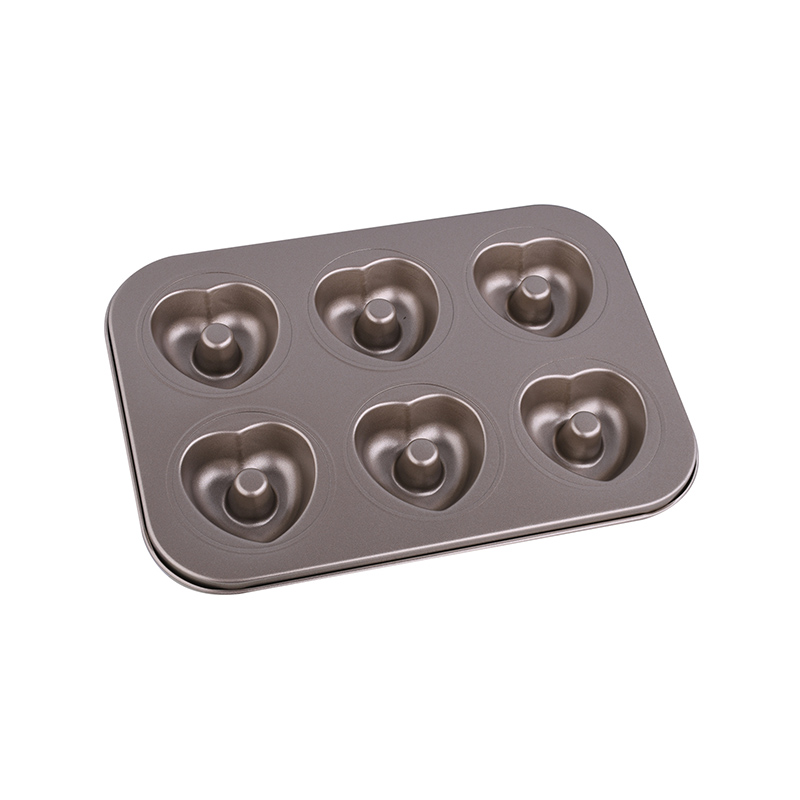
What Bakery Buyers Are Searching for This Season
Recent conversations across foodservice equipment forums and bakery supplier groups show a shift away from basic pan searches toward specific performance concerns. Buyers want to know which coating types survive high-volume commercial ovens, how many bake cycles a pan realistically lasts, and whether cavity design affects rise and shape consistency. This reflects a buyer base that has already experienced coating failure and wants documented answers before reordering.
Why Release Problems Happen More Than Buyers Expect
Sticking issues usually trace back to coating quality, oven temperature consistency, or cavity geometry rather than the batter recipe itself. A shallow release angle on cavity walls forces bakers to use excess grease, which affects texture and adds cleaning time. Buyers evaluating pans should ask about cavity draft angle and coating type, since these two factors influence release performance far more than surface color or pan weight alone.
Common Complaints We Hear From Commercial Kitchens
Our technical team fields recurring questions from bakery buyers across different regions, and several issues appear consistently:
- Coating flaking or discoloring after repeated high-heat cycles
- Uneven browning between center and edge cavities
- Warping under rapid temperature changes between batches
- Difficulty cleaning residue from textured cavity surfaces
- Inconsistent cavity depth causing uneven donut sizing
Most of these issues connect to material gauge and coating application rather than pan design alone.
Material Choice and Heat Distribution
Steel gauge thickness directly affects how evenly heat travels across a pan during baking. Thinner pans heat faster but can warp under frequent oven cycling, while properly gauged steel maintains flatter surfaces over repeated use. Buyers running multiple daily bake cycles should prioritize gauge consistency and confirm how the manufacturer tests pans under continuous commercial conditions rather than single-use demonstrations.
Coating Types and Their Real-World Lifespan
Not all non-stick coatings perform equally under repeated high-temperature exposure. Buyers should ask suppliers directly about coating composition, up to rated oven temperature, and expected bake-cycle lifespan before ordering in volume. Requesting a sample pan for a trial run under actual kitchen conditions remains the lots of reliable way to verify these claims before committing to a large order.
Cavity Design and Consistent Shape Results
Cavity depth, wall angle, and center hole diameter all influence how a donut rises and holds its shape. Bakeries producing standardized product lines need consistent cavity dimensions across every pan in a batch, since even small variations create noticeable differences on a retail shelf or in a franchise setting where uniformity matters.
What to Confirm Before Placing a Bulk Order
Buyers sourcing equipment for new or expanding bakery lines should request documented coating specifications, gauge thickness, cavity tolerances, and warranty terms. Sample testing under real oven conditions, rather than relying on catalog images alone, helps confirm whether a supplier's claims hold up in daily use.
For bakery owners and foodservice buyers comparing suppliers this season, working with established donut baking pan manufacturers who can document material quality and coating performance makes long-term equipment planning far more predictable.
