
 Language
 English
 中文简体
中文简体 Deutsch
Doughnuts are becoming more varied in shape, flavor, size, and presentation, creating new requirements for the equipment used to bake them. Recent bakery discussions have highlighted mini doughnuts, hybrid desserts, seasonal products, and more creative formats, but producing these products consistently still depends on practical bakeware design. For buyers working with Donut Baking Pan Manufacturers, the important question is not simply whether a pan can form a doughnut. It is whether the pan can support even baking, clean release, stable shaping, and efficient handling across repeated production.
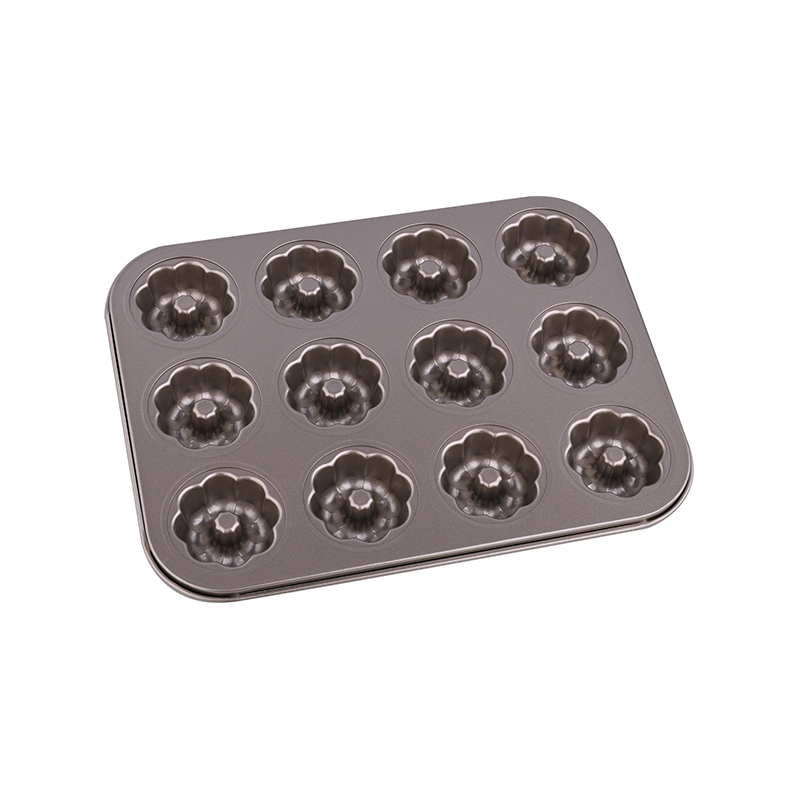
Start With the Shape of the Finished Product
A doughnut pan directly influences the appearance of the finished product. Cavity depth, edge definition, center opening, and overall geometry should correspond with the recipe and intended presentation.
For manufacturers developing different product lines, a well-designed cavity can help maintain a recognizable shape from batch to batch. This becomes particularly useful when bakeries are experimenting with mini formats or different doughnut styles while still needing consistent product appearance.
Heat Distribution Matters During Baking
Uneven heating can create differences in color, texture, and doneness between areas of the same pan. Material selection and pan construction therefore deserve attention during sourcing.
The goal is not simply to select a material that conducts heat well. Engineers also need to consider the relationship between material thickness, cavity arrangement, oven conditions, and the complete pan structure.
A practical evaluation should consider:
- Heat distribution across different cavities
- Pan stability during repeated heating
- Resistance to deformation under normal use
- Compatibility with the intended baking process
- Consistency between individual cavities
These factors can have a direct effect on production consistency.
Nonstick Performance Affects More Than Release
For baked doughnuts, clean release is closely connected with product appearance. If dough sticks around the cavity or center opening, the finished product can lose its shape during removal.
A suitable nonstick surface can make demolding easier and reduce the amount of residue left behind. However, coating selection should also consider the intended baking temperature, recipe characteristics, cleaning method, and expected frequency of use. Bakeware guidance also emphasizes following the manufacturer's use and care instructions because materials and coatings respond differently to operating conditions.
Design for Easier Cleaning
Cleaning is an important consideration for commercial users because leftover batter, sugar, or oil can gradually affect the baking surface. A complicated cavity structure may make residue more difficult to remove.
A practical donut baking pan should therefore balance decorative shaping with accessible surfaces. Smooth transitions, suitable cavity geometry, and an appropriate coating can make routine cleaning more manageable.
For procurement teams, it is useful to evaluate both baking performance and maintenance requirements rather than judging a pan only by its appearance.
Match the Pan to the Recipe
Different doughnut recipes do not necessarily behave in the same way. Batter viscosity, sugar content, fat content, and filling methods can influence how the product interacts with the pan.
This is why Donut Baking Pan Manufacturers need to understand the intended application before recommending a design. A pan developed for one type of baked doughnut may require different cavity proportions or surface treatment when used for another product concept.
Application-based communication between the manufacturer and buyer can reduce unnecessary trial and adjustment.
Think About Repeated Production
A pan used regularly needs to maintain its shape and surface condition through repeated baking and cleaning cycles. For commercial buyers, this makes construction quality and production consistency important parts of the purchasing decision.
From a manufacturer's perspective, quality control should cover areas such as:
- Dimensional consistency of cavities
- Surface condition
- Coating uniformity where applicable
- Edge and structural finishing
- Overall flatness and stability
- Finished-product inspection
These details may appear small, but they influence how reliably a pan performs in practical bakery environments.
Choose Bakeware With the Application in Mind
The right donut pan is not defined by one feature. Cavity design, heat behavior, surface treatment, cleaning requirements, recipe compatibility, and repeated-use conditions all contribute to the final baking result. As a manufacturer, understanding these factors allows Donut Baking Pan Manufacturers to develop products around the real needs of bakeries, distributors, and foodservice buyers. For overseas purchasers seeking dependable bakeware solutions, discussing the intended recipe, production process, pan format, and maintenance expectations with the manufacturer can make product selection more precise and support better long-term use.
