
 Language
 English
 中文简体
中文简体 Deutsch
Doughnuts are no longer limited to one familiar size, shape, or finishing style. Mini portions, filled varieties, seasonal concepts, decorative toppings, and hybrid desserts are giving bakeries more ways to develop their product ranges. For buyers working with Donut Baking Pan Manufacturers, this creates a practical question: can one pan design support different production needs, or should the bakeware be developed around the intended product? The answer depends on how the cavity design, material, surface, and handling requirements match the recipe and production process.
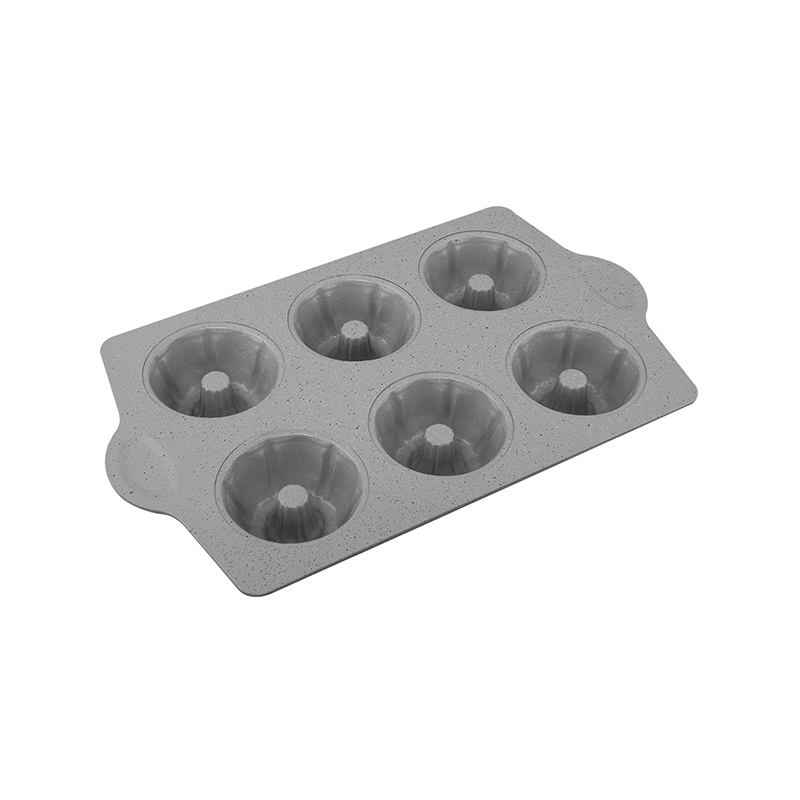
Mini Products Need More Than Smaller Cavities
Mini doughnuts may look like a simple scaled-down version of a standard product, but reducing cavity size can change how batter behaves during baking. The relationship between cavity depth, center opening, and portion size can influence the finished shape and texture.
For bakeries developing smaller products, manufacturers should consider:
- Cavity dimensions and overall geometry
- Batter filling requirements
- Ease of removing smaller baked pieces
- Spacing between cavities
- Handling during decoration and packaging
A well-planned pan design can make smaller products easier to produce consistently instead of simply reducing every dimension proportionally.
Filled Doughnuts Create Different Design Requirements
Filled doughnuts are another area where product development can affect bakeware decisions. A baked doughnut intended to receive a filling may require a different shape from one designed to be finished only with glaze or icing.
The cavity needs to provide enough structural support for the baked product while leaving room for later processing. This is particularly relevant when buyers are developing products with cream, fruit, chocolate, or other fillings.
The pan itself does not determine the final filling process, but its geometry can influence the shape and handling characteristics of the baked base.
Seasonal Products Benefit From Flexible Development
Seasonal flavors and limited-edition products allow bakeries to refresh familiar formats without completely changing their production concept. Current bakery trends continue to connect doughnuts with seasonal launches, celebration products, and visually distinctive finishes.
For manufacturers and distributors, this creates value in pan designs that can support practical product variation. Rather than focusing only on decorative novelty, engineers can consider whether a pan can maintain reliable baking performance while allowing different toppings, coatings, and finishing methods.
Shape Consistency Becomes Important After Decoration
A doughnut often receives additional processing after baking. Glazing, filling, dipping, dusting, and topping can make small differences in the baked shape more noticeable.
If cavities produce inconsistent dimensions, the finishing stage may become more difficult. This is why dimensional consistency is an important consideration when sourcing commercial doughnut bakeware.
From a manufacturing perspective, attention should be given to:
- Cavity dimensions
- Center opening consistency
- Pan flatness
- Surface condition
- Edge finishing
- Overall structural stability
These details support more predictable downstream handling.
Match Pan Development With the Baking Process
A pan should be evaluated according to how it will actually be used. Oven type, recipe characteristics, baking temperature, batter distribution, and production frequency can all affect the choice of pan construction.
For procurement teams, it is useful to provide manufacturers with application information before finalizing a design. This allows the supplier to focus on the actual production requirement rather than recommending a generic product.
A useful discussion can cover:
- Target doughnut format
- Approximate cavity size
- Recipe characteristics
- Baking equipment
- Expected production environment
- Cleaning and storage practices
Surface Treatment Still Matters for Product Development
As doughnut recipes become more varied, surface performance remains an important consideration. Different batters can behave differently during baking and release, particularly when ingredients create more residue on the pan surface.
The choice of surface treatment should therefore be considered alongside the recipe and cleaning process. Pan lubrication and release methods can affect sticking, product damage, residue buildup, and maintenance requirements in bakery production.
For buyers, discussing the intended application with Donut Baking Pan Manufacturers can help identify a surface solution that fits the production process rather than selecting a coating based only on appearance.
Build the Pan Around the Product
Product innovation does not always require completely different baking equipment, but it does require manufacturers to think carefully about how bakeware supports each format. Mini doughnuts, filled products, seasonal designs, and decorated varieties can place different demands on cavity geometry, surface treatment, handling, and cleaning. For Donut Baking Pan Manufacturers, this application-focused approach is an important part of developing practical bakeware for overseas bakeries, distributors, and foodservice buyers. When product requirements are clearly defined before production, buyers can make more informed decisions and create doughnut ranges that are easier to bake, handle, and develop.
