
 Language
 English
 中文简体
 Deutsch

As doughnut products become more diverse, bakeries are not only developing new flavors but also experimenting with different sizes, portion formats, and presentation styles. Mini doughnuts and seasonal products, for example, can require a different production approach from traditional full-size varieties. For overseas buyers, choosing the right Donut Baking Pan Manufacturers therefore involves more than selecting a cavity shape. Pan layout, spacing, oven compatibility, handling, and production workflow can all influence whether a baking tray fits smoothly into an existing operation.
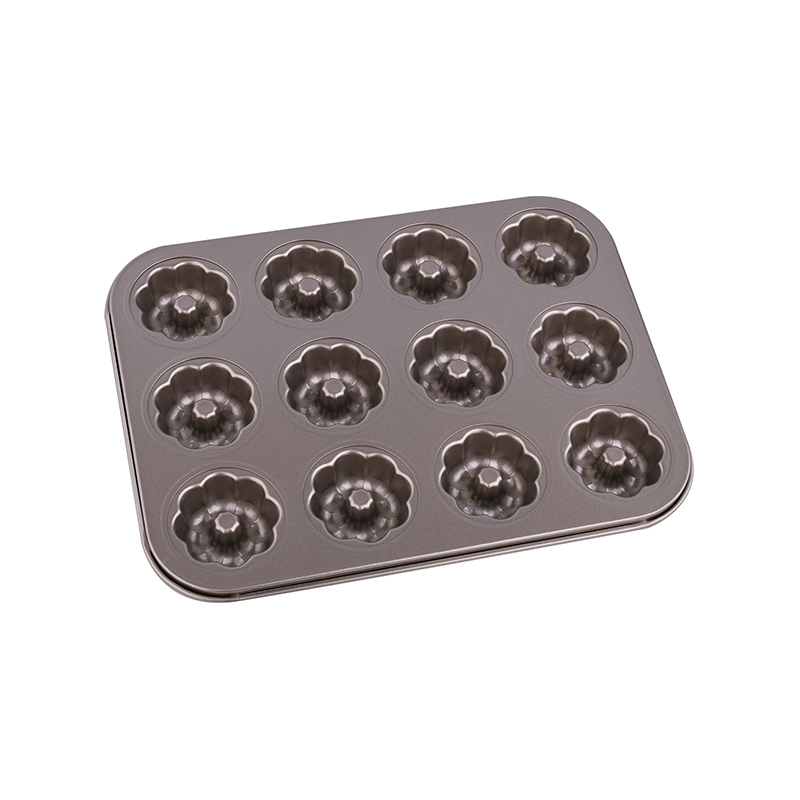
Cavity Quantity Should Match the Production Process
The number of cavities on a pan is an important purchasing consideration, but a higher cavity count is not automatically the right choice for every bakery. The useful capacity depends on the available oven space, loading method, product size, and how operators handle the pans.
A commercial bakery should consider whether the selected layout allows staff to fill, move, unload, and clean the pan without making routine operations unnecessarily difficult.
Spacing Can Affect Handling and Product Development
The distance between doughnut cavities is more than a visual detail. It can influence how easily batter is distributed, how products are removed, and how operators handle the finished pan.
For manufacturers developing custom bakeware, cavity spacing can be considered together with:
- Doughnut diameter and depth
- Required product spacing
- Pan dimensions
- Oven rack configuration
- Manual handling requirements
- Decoration and removal processes
This application-based approach is particularly useful when a buyer needs a customized doughnut baking tray rather than a standard format.
Pan Dimensions Must Fit Existing Equipment
A pan can have a suitable cavity design and still create problems if its external dimensions do not match the bakery's oven, rack, or handling equipment.
Before confirming an order, buyers should compare the actual pan dimensions with the available equipment. Rack clearance, loading direction, storage space, and operator access should all be considered.
This is one reason experienced Donut Baking Pan Manufacturers often need application information before confirming a custom design. A drawing or equipment specification can help prevent an otherwise suitable pan from becoming difficult to use.
Mini Doughnuts May Change the Layout Decision
Mini formats have become an active area of doughnut product development, with smaller portions being used for snacking, sharing, seasonal assortments, and visually varied product ranges.
A mini doughnut pan may accommodate more cavities within a similar working area, but the layout still needs to support practical batter filling and product removal. Smaller cavities can also make consistent filling more important because relatively small differences may become noticeable in the finished product.
For buyers developing a mini range, the pan should therefore be evaluated as part of the complete production process.
Think About Operator Workflow
Production efficiency does not come only from increasing the number of doughnuts baked at one time. The pan also needs to work well with the people handling it.
An efficient workflow may depend on how easily operators can:
- Fill the cavities
- Transfer loaded pans
- Place pans into the oven
- Remove baked products
- Inspect the finished doughnuts
- Clean and store the bakeware
A practical pan design should support these actions rather than creating additional handling steps.
Customization Should Start With Clear Requirements
When standard pan sizes do not match an existing production line, customization can provide a more suitable option. However, custom development works ideal when the buyer provides clear information before manufacturing begins.
Useful information may include the desired doughnut dimensions, cavity arrangement, oven dimensions, production method, material preference, surface requirements, and expected application.
From a manufacturer's perspective, these details provide a clearer basis for developing the pan and reducing unnecessary revisions during sampling.
Evaluate the Complete Pan, Not One Specification
For commercial bakery buyers, the suitable doughnut baking pan is the one that fits the complete production environment. Cavity count, spacing, external dimensions, handling, and equipment compatibility should be evaluated together rather than separately. For Donut Baking Pan Manufacturers, understanding this relationship is also important when developing standard or customized bakeware for overseas customers. A well-matched pan layout can support smoother production while giving bakeries greater flexibility when developing new doughnut formats.
